ISO 9001:2015 QMS Implementation: গার্মেন্টস ফ্যাক্টরিতে QMS কীভাবে বাস্তবায়ন করবেন

ISO 9001:2015 হলো একটি internationally recognized Quality Management System (QMS) standard, যার মূল উদ্দেশ্য হলো একটি organization-এর processes এমনভাবে পরিচালনা করা যাতে customer requirements consistently meet করা যায়, quality performance improve করা যায় এবং continual improvement নিশ্চিত করা যায়।
বিশেষ করে garments factory-তে ISO 9001:2015 implementation শুধু Quality Department-এর দায়িত্ব নয়। এটি Merchandising, Planning, Procurement, Store, Cutting, Sewing, Finishing, Quality, Packing, HR, Maintenance এবং Management—সব department-এর সমন্বিত system।
এই article-এ একটি garments factory-তে ISO 9001:2015 QMS কীভাবে practicalভাবে implement করা যায় তা ধাপে ধাপে আলোচনা করা হলো।
ISO 9001:2015 কী?
ISO 9001:2015 হলো Quality Management System-এর একটি আন্তর্জাতিক standard।
এর মাধ্যমে একটি organization একটি structured system তৈরি করে যার মাধ্যমে:
- Customer requirements identify করা হয়
- Product ও service quality control করা হয়
- Process performance monitor করা হয়
- Risk ও opportunity manage করা হয়
- Employee competency develop করা হয়
- Nonconformity control করা হয়
- Corrective Action নেওয়া হয়
- Customer satisfaction monitor করা হয়
- Continual improvement করা হয়
সহজভাবে বলা যায়:
ISO 9001 = Requirement → Process → Control → Measurement → Improvement
ISO 9001:2015-এর ৭টি Quality Management Principles
ISO 9001:2015 সাতটি fundamental Quality Management Principle-এর উপর ভিত্তি করে তৈরি।
1. Customer Focus
Customer requirements বুঝতে হবে এবং customer satisfaction বাড়ানোর জন্য system establish করতে হবে।
Garments factory-তে এর উদাহরণ:
- Buyer specification
- Measurement specification
- Quality standard
- Packing requirement
- Delivery requirement
- Testing requirement
2. Leadership
Top Management-এর commitment QMS-এর জন্য অত্যন্ত গুরুত্বপূর্ণ।
Management-এর দায়িত্ব হলো:
- Quality Policy establish করা
- Quality Objectives নির্ধারণ করা
- প্রয়োজনীয় resources দেওয়া
- Responsibilities define করা
- QMS effectiveness review করা
- Continual improvement support করা
3. Engagement of People
Quality শুধু QA/QC department-এর কাজ নয়।
একজন:
- Cutting operator
- Sewing operator
- Quality inspector
- Supervisor
- Merchandiser
- Storekeeper
- Maintenance technician
সবার কাজ final product quality-এর উপর impact করতে পারে।
4. Process Approach
প্রতিটি কাজকে isolated activity হিসেবে না দেখে interconnected process হিসেবে পরিচালনা করতে হবে।
একটি garments factory-এর process flow হতে পারে:
Customer Requirement → Order Review → Planning → Material → Cutting → Sewing → Finishing → Inspection → Packing → Shipment → Customer Feedback
5. Improvement
Organization-এর লক্ষ্য হওয়া উচিত continual improvement।
যেমন:
DHU 8% → 6% → 4%
অথবা:
Customer Complaint 5/month → 3/month → 1/month
6. Evidence-Based Decision Making
Decision নেওয়ার সময় শুধু assumption-এর উপর নির্ভর না করে data ব্যবহার করতে হবে।
যেমন:
- DHU
- Defect Rate
- Rejection Rate
- RFT
- Customer Complaint
- Supplier Performance
- Inspection Result
7. Relationship Management
Supplier, customer এবং অন্যান্য relevant interested parties-এর সঙ্গে effective relationship maintain করতে হবে।
ISO 9001:2015-এর গুরুত্বপূর্ণ Clauses
ISO 9001:2015-এর implementation-এর ক্ষেত্রে Clause 4 থেকে Clause 10 সবচেয়ে গুরুত্বপূর্ণ।
| Clause | বিষয় |
|---|---|
| Clause 4 | Context of the Organization |
| Clause 5 | Leadership |
| Clause 6 | Planning |
| Clause 7 | Support |
| Clause 8 | Operation |
| Clause 9 | Performance Evaluation |
| Clause 10 | Improvement |
Clause 4 — Context of the Organization
প্রথমে organization-এর internal এবং external context বুঝতে হবে।
Internal Issues
যেমন:
- Manpower
- Machine
- Technology
- Production capacity
- Employee competency
- Quality performance
- Infrastructure
- Organizational structure
External Issues
যেমন:
- Customer requirements
- Market condition
- Government regulations
- Labour requirements
- Supplier condition
- Technology changes
- Industry requirements
Interested Parties
QMS-এর সঙ্গে সম্পর্কিত relevant interested parties identify করতে হবে।
| Interested Party | Example Requirement |
|---|---|
| Customer | Quality, delivery, specification |
| Employee | Training, safe workplace |
| Supplier | Clear requirements, payment |
| Government | Legal compliance |
| Management | Business performance |
| Certification Body | ISO requirements |
QMS Scope
Organization-এর QMS কোন activities-এর উপর applicable তা clearly define করতে হবে।
Garments factory-এর একটি example:
“Manufacturing and supply of knitted and woven garments including cutting, sewing, finishing, inspection and packing.”
তবে actual scope অবশ্যই organization-এর বাস্তব activities অনুযায়ী নির্ধারণ করতে হবে।
Clause 5 — Leadership
Top Management-এর leadership এবং commitment QMS implementation-এর জন্য অত্যন্ত গুরুত্বপূর্ণ।
Management-এর উচিত:
- Quality Policy establish করা
- Quality Objectives establish করা
- Customer focus নিশ্চিত করা
- Responsibilities define করা
- Resources provide করা
- QMS performance review করা
- Improvement support করা
Quality Policy
একটি garments organization-এর Quality Policy-এর example:
“We are committed to manufacturing and supplying quality garments that meet customer requirements and applicable statutory and regulatory requirements, while continually improving our processes, people competency and Quality Management System.”
Quality Policy employees-এর কাছে communicate করতে হবে এবং organization-এর context-এর সঙ্গে relevant রাখতে হবে।
Quality Objectives
Quality Policy-এর পাশাপাশি measurable Quality Objectives থাকতে হবে।
Example:
| Quality Objective | Example Target |
|---|---|
| Final Inspection Pass Rate | ≥ 98% |
| Customer Complaint | ≤ 2/month |
| On-Time Delivery | ≥ 95% |
| Rejection Rate | ≤ 2% |
| Alteration Rate | ≤ 3% |
| CAPA Closure | ≥ 95% |
বাস্তব target factory-এর baseline, customer requirements এবং management objectives অনুযায়ী নির্ধারণ করা উচিত।
Clause 6 — Planning
Planning-এর মধ্যে সবচেয়ে গুরুত্বপূর্ণ বিষয়গুলোর একটি হলো Risk and Opportunity Management।
Risk-Based Thinking
Garments factory-তে সম্ভাব্য risk:
Fabric Risk
- Shade variation
- GSM variation
- Width variation
- Shrinkage
- Fabric defects
Cutting Risk
- Wrong marker
- Wrong size
- Wrong panel
- Numbering error
Sewing Risk
- Skip stitch
- Broken stitch
- Open seam
- Measurement problem
Finishing Risk
- Stain
- Press mark
- Measurement deviation
- Loose thread
Packing Risk
- Wrong size
- Wrong color
- Wrong quantity
- Wrong assortment
- Wrong carton marking
Risk Register
একটি Risk Register এমন হতে পারে:
| Process | Risk | Impact | Control |
|---|---|---|---|
| Fabric Inspection | Fabric defect | High | Fabric Inspection |
| Cutting | Wrong panel | High | Cutting Audit |
| Sewing | Sewing defect | High | Inline Inspection |
| Finishing | Measurement problem | High | Measurement Audit |
| Packing | Wrong assortment | High | Packing Verification |
| Shipment | Late delivery | High | Production Planning |
Risk evaluation-এর জন্য organization নিজস্ব defined criteria ব্যবহার করতে পারে।
Clause 7 — Support
Clause 7-এর মধ্যে Resources, Competence, Awareness, Communication এবং Documented Information গুরুত্বপূর্ণ।
Infrastructure
Factory-এর প্রয়োজনীয় infrastructure maintain করতে হবে:
- Building
- Machines
- Lighting
- Ventilation
- IT systems
- Inspection equipment
- Production equipment
Monitoring and Measuring Resources
যেসব equipment quality measurement-এর জন্য ব্যবহার করা হয় সেগুলোর appropriate control থাকতে হবে।
যেমন:
- Measuring Tape
- Weighing Scale
- GSM Machine
- Temperature Gauge
- Moisture Meter
- অন্যান্য measuring equipment
প্রয়োজন অনুযায়ী calibration বা verification এবং calibration status maintain করতে হবে।
Competence
প্রতিটি গুরুত্বপূর্ণ position-এর competency requirement define করা উচিত।
Quality Inspector-এর জন্য:
- Garments inspection knowledge
- AQL knowledge
- Measurement knowledge
- Defect identification
- Customer specification understanding
- Inspection procedure knowledge
Training-এর evidence অবশ্যই maintain করা উচিত।
Training Matrix
একটি Training Matrix হতে পারে:
| Employee | Fabric Inspection | AQL | Measurement | Safety | ISO 9001 |
|---|---|---|---|---|---|
| Inspector-01 | ✓ | ✓ | ✓ | ✓ | ✓ |
| Inspector-02 | ✓ | ✓ | ✓ | ✓ | ✓ |
| Supervisor-01 | ✓ | ✓ | ✓ | ✓ | ✓ |
Awareness
Employee-দের জানতে হবে:
- Quality Policy
- Quality Objectives
- তাদের কাজের quality impact
- Customer requirements
- Nonconforming product-এর consequence
Documented Information
একটি effective QMS-এর জন্য appropriate documented information maintain করতে হবে।
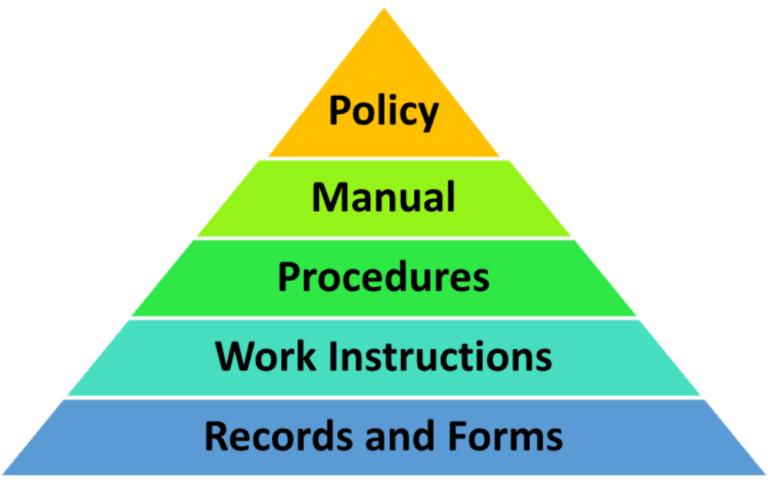
একটি practical hierarchy:
QMS
↓
Policies / System Documents
↓
Procedures
↓
SOP / Work Instructions
↓
Forms
↓
Records
Garments Factory-এর গুরুত্বপূর্ণ QMS Documents
QMS Documents
- QMS Scope
- Quality Policy
- Quality Objectives
- Process Map
- Organization Chart
- Responsibility Matrix
Procedures
- Document Control
- Record Control
- Risk Management
- Internal Audit
- Corrective Action
- Management Review
- Customer Complaint
- Customer Satisfaction
- Supplier Evaluation
- Training and Competency
- Calibration
- Nonconforming Product Control
Quality Procedures
- Fabric Inspection
- Trim Inspection
- Cutting Inspection
- Inline Inspection
- End-line Inspection
- Finishing Inspection
- Final Inspection
- Packing Inspection
Clause 8 — Operation
Clause 8 garments factory-এর জন্য অত্যন্ত গুরুত্বপূর্ণ কারণ এখানে actual production এবং service realization control করা হয়।
Order Review
Customer order গ্রহণের আগে review করতে হবে:
- Product specification
- Quantity
- Size
- Color
- Fabric
- Measurement
- Quality requirements
- Delivery date
- Testing requirements
- Packaging requirements
Production Planning
Production Planning-এর মধ্যে থাকতে পারে:
- Order quantity
- Production capacity
- Machine availability
- Manpower
- Material availability
- Production target
- Delivery date
Supplier Evaluation
Supplier-এর performance monitor করা উচিত।
Criteria:
- Quality
- Delivery
- Price
- Compliance
- Responsiveness
- Documentation
Example:
| Supplier | Quality | Delivery | Response |
|---|---|---|---|
| Supplier A | 95% | 92% | 90% |
| Supplier B | 88% | 96% | 94% |
Incoming Material Inspection
Fabric এবং trims receive করার পরে defined requirements অনুযায়ী inspection করতে হবে।
Fabric
Check করা যেতে পারে:
- Quantity
- Width
- GSM
- Shade
- Fabric defects
- Shrinkage
- Relevant test requirements
Trims
Check করা যেতে পারে:
- Label
- Button
- Zipper
- Thread
- Hangtag
- Poly
- Carton
Fabric Inspection — 4 Point System
Garments industry-তে fabric inspection-এর জন্য 4 Point System widely used।
Defect-এর severity অনুযায়ী points দেওয়া হয়:
- 1 Point
- 2 Points
- 3 Points
- 4 Points
তারপর inspection area-এর ভিত্তিতে points calculate করা হয়।
Formula
Points per 100 Sq. Yards = Total Points × 100 ÷ Inspected Area in Sq. Yards
Example:
Total Points = 28
Inspected Area = 1,000 Sq. Yards
তাহলে:
28 × 100 ÷ 1,000 = 2.8 Points / 100 Sq. Yards
Acceptance criteria customer/factory standard অনুযায়ী নির্ধারণ করতে হবে।
Cutting Quality Control
Cutting-এর আগে check:
- Marker
- Fabric shade
- Lay length
- Lay height
- Pattern
- Size ratio
- Fabric direction
Cutting-এর পরে:
- Panel count
- Numbering
- Bundle
- Size
- Shade
- Cutting accuracy
Sewing Quality Control
Sewing section-এ quality control-এর গুরুত্বপূর্ণ activities:
First Output Inspection
Production শুরু হওয়ার পরে initial output check করা।
Inline Inspection
Production চলাকালীন defects identify করা।
Check করা যেতে পারে:
- Stitch
- Seam
- SPI
- Measurement
- Construction
- Appearance
- Workmanship
End-Line Inspection
Line থেকে garment বের হওয়ার সময় inspection করা হয়।
Check:
- Major defects
- Minor defects
- Measurement
- Appearance
- Construction
Inspection result record করতে হবে।
Finishing Quality Control
Finishing section-এ check:
- Loose thread
- Stain
- Press mark
- Ironing
- Measurement
- Appearance
- Label
- Folding
Final Inspection
Shipment-এর আগে final inspection করতে হবে।
Check করা যেতে পারে:
- Quantity
- Measurement
- Workmanship
- Appearance
- Packing
- Assortment
- Label
- Carton marking
Customer-specific requirements থাকলে সেগুলোও follow করতে হবে।
Nonconforming Product Control
Defective product identify এবং control করার জন্য defined process থাকতে হবে।
সাধারণ flow:
Defect Found
↓
Identify
↓
Segregate
↓
Record
↓
Disposition
↓
Rework / Repair / Reject
↓
Re-inspection
↓
Release
Clause 9 — Performance Evaluation
QMS effective কিনা তা data দিয়ে evaluate করতে হবে।
Quality KPIs
- DHU
- Defect Rate
- Rejection Rate
- Alteration Rate
- RFT
- First Pass Yield
- Final Inspection Pass Rate
- Customer Complaint
Delivery KPI
- On-Time Delivery
- Production Efficiency
Supplier KPI
- Supplier Quality
- Supplier Delivery
Internal Audit
Internal Audit QMS implementation-এর একটি গুরুত্বপূর্ণ verification process।
Audit process:
Audit Plan
↓
Audit Preparation
↓
Opening Meeting
↓
Process Audit
↓
Evidence Collection
↓
Audit Finding
↓
Closing Meeting
↓
Corrective Action
↓
Follow-up
Audit Evidence
Auditor সাধারণত evidence হিসেবে দেখতে পারে:
- Documents
- Records
- Employee Interview
- Workplace Observation
- Actual Process
- KPI Data
সবচেয়ে গুরুত্বপূর্ণ বিষয় হলো:
Document যা বলছে, বাস্তব process-এ সেটি হচ্ছে কিনা।
Nonconformity Example
ধরা যাক procedure অনুযায়ী প্রত্যেক fabric lot inspection করার কথা।
কিন্তু কিছু lot-এর inspection record পাওয়া যাচ্ছে না।
এক্ষেত্রে requirement এবং actual implementation-এর মধ্যে gap পাওয়া গেলে তা appropriate audit finding হিসেবে record করতে হবে।
Corrective Action
শুধু defective product repair করলেই corrective action শেষ হয় না।
একটি effective corrective action process:
Problem
↓
Correction / Containment
↓
Root Cause Analysis
↓
Corrective Action
↓
Implementation
↓
Effectiveness Verification
Root Cause Analysis — 5 Why
Example:
Problem
Final inspection-এ measurement failure।
Why 1
Measurement specification follow হয়নি।
Why 2
Operator-এর কাছে latest specification ছিল না।
Why 3
Latest document properly distributed হয়নি।
Why 4
Document revision control effective ছিল না।
Why 5
Document control process properly implemented হয়নি।
এভাবে শুধু “operator mistake” না বলে system-এর root cause খুঁজে বের করার চেষ্টা করতে হবে।
Fishbone Analysis
Major quality problem হলে Fishbone বা Ishikawa analysis ব্যবহার করা যায়।
Possible categories:
- Man
- Machine
- Method
- Material
- Measurement
- Environment
উদাহরণ:
Problem: High Sewing Defect
সম্ভাব্য কারণ:
- Operator skill
- Machine setting
- Needle condition
- Sewing method
- Thread quality
- Inspection frequency
Customer Complaint Management
Customer complaint পাওয়ার পরে একটি structured process থাকা উচিত:
- Complaint Receive
- Complaint Register
- Investigation
- Containment
- Root Cause Analysis
- Corrective Action
- Customer Response
- Effectiveness Verification
Complaint Register
| Date | Customer | Complaint | Root Cause | Action | Status |
|---|---|---|---|---|---|
| 01-10 | Buyer A | Measurement Issue | Pattern Issue | Pattern Correction | Closed |
Customer Satisfaction
Customer satisfaction evaluate করার জন্য ব্যবহার করা যেতে পারে:
- Customer Feedback
- Complaint Data
- Return Data
- Rejection Data
- On-Time Delivery
- Quality Performance
- Buyer Scorecard
Clause 10 — Improvement
ISO 9001:2015-এর একটি গুরুত্বপূর্ণ উদ্দেশ্য হলো continual improvement।
উদাহরণ:
Previous Month:
DHU = 8%
Corrective Action-এর পরে:
DHU = 5%
পরবর্তী target:
DHU < 4%
এখানে data-driven improvement approach ব্যবহার করা হয়েছে।
PDCA Cycle
QMS improvement-এর জন্য PDCA একটি useful management approach।
PLAN
- Objective
- Risk
- Process
- Resources
DO
- Implement process
- Training
- Production
- Control
CHECK
- Inspection
- KPI
- Audit
- Measurement
ACT
- Corrective Action
- Improvement
- Standardization
তারপর আবার:
PLAN → DO → CHECK → ACT
Management Review
Top Management নির্দিষ্ট interval-এ QMS review করবে।
Management Review-এর inputs হতে পারে:
- Internal Audit Results
- Customer Feedback
- Quality KPI
- Process Performance
- Nonconformities
- Corrective Actions
- Supplier Performance
- Risks and Opportunities
- Resource Requirements
- Improvement Opportunities
Review-এর outputs হতে পারে:
- Improvement actions
- Resource decisions
- Process changes
- Corrective actions
- Strategic decisions
ISO 9001:2015 Implementation Roadmap
একটি garments factory-তে implementation-এর practical roadmap:
Phase 1 — Gap Assessment
Current system এবং ISO 9001 requirements-এর মধ্যে gap identify করা।
Phase 2 — QMS Planning
Scope, Policy, Objectives এবং Process Map তৈরি করা।
Phase 3 — Documentation
Procedures, SOP, Work Instructions এবং Forms তৈরি করা।
Phase 4 — Implementation
Factory-এর actual process-এ QMS চালু করা।
Phase 5 — Training
Employees এবং process owners-দের training দেওয়া।
Phase 6 — Data Collection
Inspection, KPI, Complaint এবং অন্যান্য relevant records maintain করা।
Phase 7 — Internal Audit
QMS-এর effectiveness verify করা।
Phase 8 — Corrective Action
Audit findings এবং identified problems-এর corrective action নেওয়া।
Phase 9 — Management Review
Top Management-এর মাধ্যমে QMS performance review করা।
Phase 10 — Certification Audit
প্রয়োজনে external certification body-এর মাধ্যমে certification audit সম্পন্ন করা।
Garments Factory-এর ISO 9001 QMS Checklist
একটি practical checklist:
- QMS Scope Defined
- Quality Policy Established
- Quality Objectives Established
- Process Map Prepared
- Risks Identified
- Responsibilities Defined
- Training Matrix Prepared
- Competency Requirements Defined
- Document Control Implemented
- Record Control Implemented
- Supplier Evaluation Implemented
- Incoming Inspection Implemented
- Production Quality Control Implemented
- Final Inspection Implemented
- Nonconforming Product Control Implemented
- Customer Complaint System Implemented
- KPI Monitoring Implemented
- Internal Audit Completed
- Corrective Actions Closed
- Management Review Completed
- Continual Improvement Evidence Available
ISO 9001 QMS-এর মূল Formula
একজন QMS বা Quality Professional হিসেবে নিচের flow-টি মনে রাখা খুব গুরুত্বপূর্ণ:
Customer Requirement
↓
Process
↓
Risk Identification
↓
Quality Control
↓
Record
↓
Measurement
↓
Internal Audit
↓
Root Cause Analysis
↓
Corrective Action
↓
Effectiveness Verification
↓
Continual Improvement
উপসংহার
ISO 9001:2015 implementation শুধু কিছু documents তৈরি করার বিষয় নয়। একটি effective QMS তখনই তৈরি হয় যখন documented procedures, trained people, controlled processes, objective evidence, performance measurement এবং continual improvement—সবগুলো একসঙ্গে কাজ করে।
বিশেষ করে garments factory-তে QMS-এর লক্ষ্য হওয়া উচিত:
Right Requirement → Right Process → Right Control → Right Evidence → Continuous Improvement
একটি strong Quality Management System customer satisfaction বাড়াতে, process variation কমাতে, defects control করতে এবং organization-এর overall performance improve করতে সহায়তা করতে পারে।
Note: ISO 9001:2015-এর actual implementation organization-এর size, products/services, processes, customer requirements এবং applicable statutory/regulatory requirements অনুযায়ী customize করা উচিত।
মন্তব্য
আপনার অভিজ্ঞতা বা মতামত শেয়ার করুন — গঠনমূলক মন্তব্য সবাইকে সাহায্য করে।